 C. Sivaraj
Different AI systems have different retrieval mechanisms and citation patterns. Optimizing for all of them requires platform-specific strategies, not a single generic playbook.
Google AI Overviews
How it works: Google states that AI features are rooted in core Search ranking and quality systems. AI Overviews prioritize pages already ranking in the top 20, then apply passage-level evaluation.
Citation pattern: Typically cites 2-4 sources with inline links. Prefers passages 150-300 words, though shorter snippets (40-60 words) are also cited.
Optimization priority:
- Rank in top 20 for the target query (SEO baseline)
- Implement clear content structure (H2/H3 hierarchy)
- Add schema markup (Article, Organization, FAQPage)
- Keep passages 40-200 words for optimal extraction
Measurement: Monitor Google Search Console for “Impression Growth” on pages with AI Overviews. Use tools like Scrunch or AthenaHQ to track AI citations.
ChatGPT (GPT-4, GPT-5)
How it works: ChatGPT retrieves from its training data and, if enabled, can access live web data via web browsing.
Citation pattern: Cites sources inconsistently in conversation mode; more reliable in search mode. Prefers long-form, comprehensive content.
Optimization priority:
- High domain authority (backlinks, established brand)
- Comprehensive, long-form content (3,000+ words)
- Original research or case studies
- Frequent content updates (recency signals)
Measurement: Ask ChatGPT to cite sources for your topics and log which pages appear. Monitor referral traffic from ChatGPT in GA.
Perplexity
How it works: Perplexity is a real-time AI search engine that retrieves live, current web content. It favors fresh, high-authority sources.
Citation pattern: Cites 3-8 sources per answer. Prefers recent content (published or updated within 3 months). Gives heavy weight to brand authority and topical expertise.
Optimization priority:
- Content freshness (update core articles every 6 months)
- Multi-channel presence (press, guest articles, interviews)
- Entity authority (consistent brand signals)
- Original insights and data
Measurement: Use Perplexity’s built-in citation links to track “Perplexity referral” traffic. Test queries weekly to monitor citation status.
Google Gemini
How it works: Gemini powers AI Overviews and AI Mode. AI Mode is Google’s conversational AI chat and retrieves similarly to AI Overviews but emphasizes multimodal content (images, videos, PDFs).
Citation pattern: Cites authoritative sources and shows knowledge panels when available. Prefers pages with clear entity signals.
Optimization priority:
- Organization + Person schema
- Clear topical authority signals (knowsAbout properties)
- Multimedia (images, videos, infographics)
- Verified author credentials
Measurement: Test queries in Google AI Mode and note which sources are cited. Monitor Google Search Console for AI Mode traffic (if available).
Claude (Anthropic)
How it works: Claude retrieves from training data and, in certain contexts, live web data. It emphasizes comprehensive, thoughtful analysis.
Citation pattern: In chat, Claude may not cite sources explicitly unless asked. In search contexts, it prefers authoritative, well-reasoned content.
Optimization priority:
- Depth and nuance (avoid oversimplification)
- Comprehensive analysis
- Expert credentials and cited research
- Original frameworks or methodology
Measurement: Manually test Claude with your topics. Monitor whether Claude references or recommends your brand.
Advanced Topics: What Competitors Miss
Most AI citation guides stop at basic optimization. These advanced topics separate leaders from followers - and they build directly on the CITE Framework for AI citation.
Query Fan-Out: How AI Expands Queries
When you ask Google AI Overviews “how to structure content for AI citations,” Google doesn’t just search for that exact phrase. It expands the query:
- “AI citation optimization strategies”
- “Passage-level retrieval best practices”
- “Content architecture for generative engines”
- “Entity signals for LLM trust”
- “FAQ schema for AI search”
This is query fan-out. AI systems break down user intent and search for related subtopics.
Implication: your article should cover not just the primary query but semantic variations and related subtopics. This increases the probability of being retrieved for any one of the fan-out queries.
Embeddings & Vector Search: Why Position Matters Less
Traditional search is lexical (keyword matching). AI retrieval is semantic (meaning matching).
AI systems convert both queries and passages into high-dimensional numerical vectors. Similarity between vectors determines relevance, not keyword overlap.
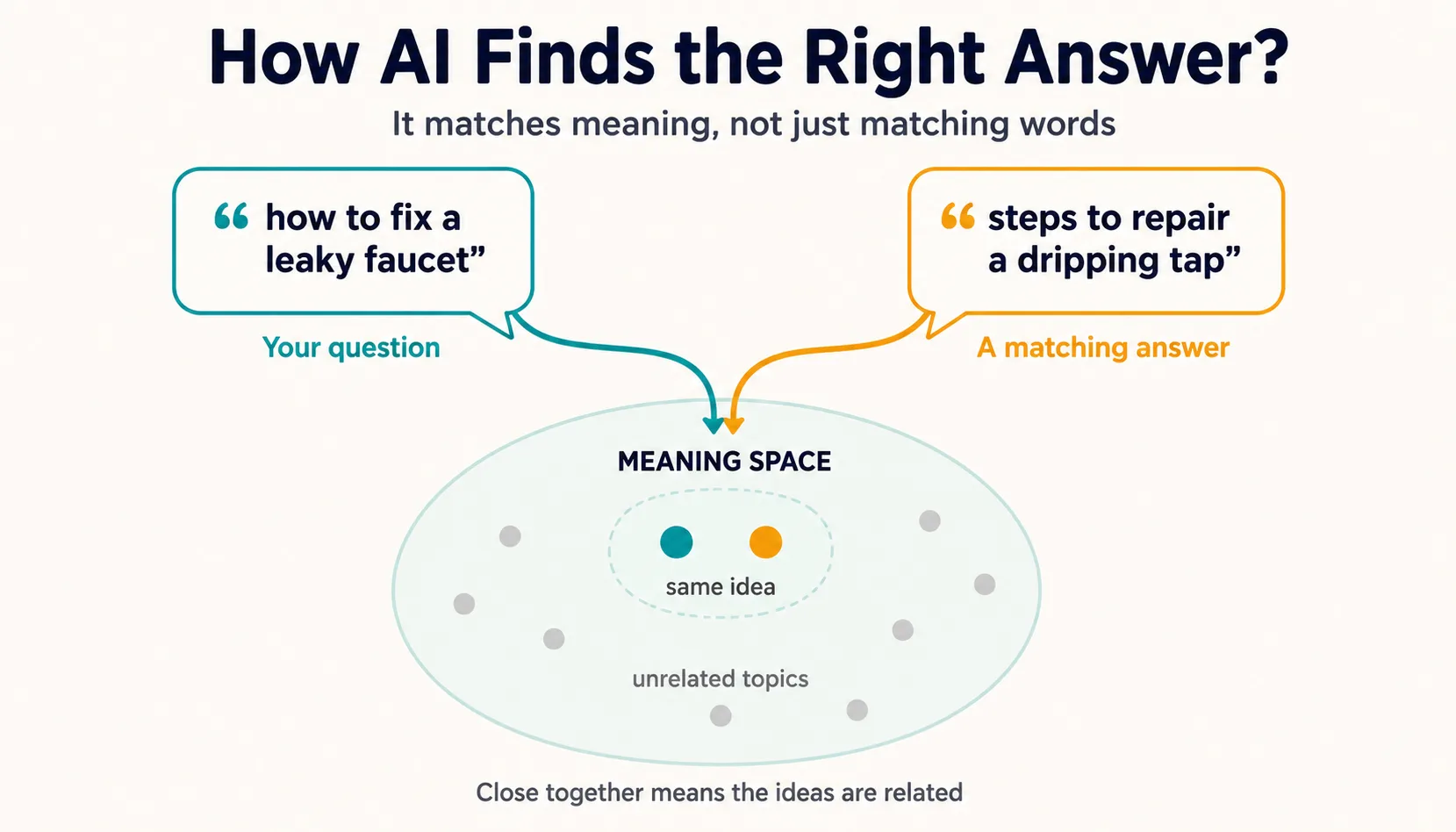
Implication: a passage with perfect keyword matching but poor semantic relationship to the query won’t be retrieved. A passage with no keywords but strong semantic alignment will.
How to optimize: write for semantic clarity. Define terms. Explain concepts. Use entity names consistently. Focus on meaning over keyword density.
Passage Independence: The “Remove Context” Test
AI systems extract passages without surrounding context. Your passage must be understandable in isolation.
Test: take any paragraph from your article. Remove all surrounding paragraphs. Can someone understand it fully? If not, add more context within that paragraph.
Citation Confidence Scoring
AI systems score each retrieved passage on multiple dimensions before deciding whether to cite it. High-confidence passages get cited; low-confidence passages are discarded.
Confidence factors:
- Source authority: brand reputation, backlinks, reviews
- Passage clarity: unambiguous, well-structured, answering the query
- Fact density: specific claims, statistics, verifiable information
- Entity alignment: clear entity signals, schema markup, consistency
- Freshness: recently published or updated
Passages scoring high on all dimensions are citation winners.
Information Gain Scoring (Meta-Framework)
Information Gain - how much new information a passage provides - is a metric AI systems implicitly evaluate.
A passage that repeats competitor information has low Information Gain. A passage with unique data, proprietary frameworks, or novel insights has high Information Gain.
AI systems weight high Information Gain passages higher during synthesis.
Hallucination Prevention & Trust
AI systems are penalized internally for citing content that leads to hallucination (false claims, contradictions). They avoid sources with:
- Factual errors or outdated claims
- Low third-party validation
- Inconsistent entity signals
- Unverified author credentials
Build trust to prevent being dropped from the citation pool.
Common Reasons AI Systems Don’t Cite Your Content
If your content isn’t getting cited despite being informative, one of these factors is likely blocking you.
1. Thin Topical Coverage
Your article doesn’t answer the full intent behind the user’s question. You covered part of the topic but missed related angles that AI systems expect.
Fix: run competitor analysis. Identify topics competitors cover that you’re missing. Add 2-3 new sections.
2. Weak Entity Relationships
Your content mentions entities (people, organizations, concepts) but doesn’t establish clear relationships between them.
Fix: add entity schema (sameAs, knowsAbout) explicitly linking related entities. Define how concepts relate.
3. Generic Introductions
Your opening section provides context instead of answering the question. AI systems skip throat-clearing and look for direct answers.
Fix: remove introduction sections. Start with the answer.
4. Low Information Gain
Your content is comprehensive but derivative. It says what competitors say without adding unique data, frameworks, or perspective.
Fix: add original research, proprietary frameworks, or verified expert insights.
5. Poor Passage Structure
Your passages are long (500+ words), narrative, and context-dependent. AI systems can’t extract meaningful chunks.
Fix: break into 40-200 word passages. Make each standalone. Avoid pronoun relay.
6. Missing Author Credibility
Your author is unnamed or lacks credentials. AI systems can’t verify who wrote this content or why they’re authoritative.
Fix: add bylines with author bios. Create Person schema. Link to the author’s verified social profiles.
7. Inconsistent Brand Signals
Your organization name, spelling, and descriptions vary across your website and external profiles.
Fix: audit your brand name everywhere - website, Google Business Profile, LinkedIn, social media. Standardize it.
8. Outdated Facts
Your statistics are stale. Your process descriptions are no longer accurate. AI systems penalize outdated sources.
Fix: establish a content refresh schedule. Update core articles every 6 months. Update statistics when new data is published.
9. Sparse Supporting Evidence
You make claims without citations, statistics, or examples. Reader trust is low, and AI systems don’t cite unverified claims.
Fix: cite sources by name instead of “studies show.” Include specific statistics. Add case studies or examples.
10. Weak Internal Linking
Your article doesn’t link to related content. AI systems use internal linking signals to understand your topical ecosystem, the same way they read entity signals across your site’s ranking factors.
Fix: add 5-10 internal links to topically related articles. Use descriptive anchor text.
Conclusion
The brands that ignore this will watch their traffic erode as users increasingly go to AI systems instead of search results - and those AI systems cite their better-optimized competitors.
The competitive advantage in 2026 goes to content teams that treat AI citation optimization as a distinct discipline, not a side project. It requires dedicated resources, ongoing measurement, and a willingness to rewrite content that ranks well but isn’t citation-ready.
But the ROI is clear. Get cited in AI answers, and you own mindshare in the new search era.
Frequently Asked Questions
How often should I refresh AI-focused content?
Core articles should be updated every 6 months. High-velocity topics (algorithm updates, new research) should be refreshed every 4 weeks.
Can a new website earn AI citations?
Yes, but it takes longer. New sites start at a disadvantage because they lack brand authority and third-party validation.
Strategy: (1) focus on niche topics with less competition, (2) build author credibility through guest articles and interviews, (3) accumulate reviews and third-party mentions, (4) publish original research to gain earned media, (5) build backlinks through PR and partnerships.
Does llms.txt influence AI retrieval?
llms.txt is a robots.txt equivalent for LLMs. It signals which content you want indexed by AI systems.
How do I measure AI citation visibility?
Track three metrics: (1) citation frequency - how often your content is cited in AI answers, via manual testing or tools like Scrunch and Surround, (2) citation rate - the percentage of your articles appearing in AI answers (citations / total articles), (3) referral traffic from AI - monitor GA for traffic from ChatGPT, Perplexity, and other AI platforms. These metrics replace traditional rank tracking for AI optimization.
Which schema types matter most for AI search?
The top 4: (1) Organization schema (brand identity, trust foundation), (2) Person schema (author credibility, authority signals), (3) Article schema (content type, publish date, author), (4) FAQPage schema (Q&A structuring, 30%+ citation rate lift).
Here is the checklist: AI Citation Toolkit