Key Takeaways
- Because Google published its guide on May 15, 2026, AI Overviews and AI Mode run on the same core Search systems as regular results.
- To appear, a page “must be indexed and eligible to be shown in Google Search with a snippet,” and the site must be included in Search generative AI features in Search Console.
- Google names five tactics to ignore for Google Search. They are llms.txt and other “special” markup, chunking content, rewriting just for AI, inauthentic mentions, and overfocusing on structured data.
- Google warns that creating separate pages for every search variation, primarily to manipulate rankings or AI responses, violates its scaled content abuse spam policy.
- Google’s Gemini 4 Hydrogen became the default AI Mode model on November 12, 2026, and Google says it “supercharges” query fan-out. The guide’s advice predates that launch.
What does Google’s guide say about how to optimize for AI Overviews and AI Mode?
Google’s guide says AI Overviews and AI Mode run on the same core Search systems as regular results. Standard SEO, crawlable pages, and original content decide visibility. No special file, markup, or writing style is required.
The guide closes with five “Next steps” (Google):
- Apply SEO best practices to generative AI search.
- Create non-commodity content that’s helpful, reliable, and people-first.
- Prioritize effective SEO strategies over “AEO/GEO hacks.”
- Monitor visibility in Search Console.
- Explore agentic experiences.
Google’s separate AI features documentation says the same in one line: “There are no additional requirements to appear in AI Overviews or AI Mode, nor other special optimizations necessary.”
What do the terms in Google’s guide mean?
The guide uses five terms that recur in AI search advice. Each has a plain meaning, and Google defines most of them directly.
AEO and GEO
AEO stands for “answer engine optimization” and GEO for “generative engine optimization.” Google describes both as terms for work focused on improving visibility in AI search. Its position is that, from Google Search’s point of view, this work is still SEO.
Retrieval-augmented generation (grounding)
Retrieval-augmented generation, also called grounding, means Google retrieves relevant pages from its Search index and builds the answer from them. The answer then shows clickable links to the pages that support it.
Query fan-out
Google defines query fan-out as “a set of concurrent, related queries generated by the model to request more information.” The guide’s example is a search for “how to fix a lawn that’s full of weeds,” which can fan out to a related search for “best herbicides for lawns.”
Commodity and non-commodity content
Google says commodity content “is often based on common knowledge, which could originate from anyone” and “typically adds little unique insight for readers.”
Non-commodity content “provides unique expert or experienced takes that go beyond common knowledge and the ordinary.”
The guide’s contrast is “7 Tips for First-Time Homebuyers” (commodity) against “Why We Waived the Inspection & Saved Money: A Look Inside the Sewer Line” (non-commodity).
Agentic experiences
Google writes that “AI agents are autonomous systems that can perform tasks on behalf of people,” such as booking a reservation or comparing product specifications. The guide notes that “Protocols like Universal Commerce Protocol (UCP) are emerging” and treats this section as early guidance.
Which AI search tactics does Google say to skip?
Google lists five tactics to ignore for Google Search and warns against a sixth under its spam policy. The table pairs each with Google’s own words and a better use of the same hours.
| Tactic | What Google’s guide says | Spend the time on this instead |
|---|---|---|
| llms.txt and other “special” markup | “You don’t need to create new machine-readable files, AI text files, markup, or Markdown to appear in Google Search” | Fixing crawl and indexing errors in Search Console |
| Chunking content | “There’s no requirement to break your content into tiny pieces for AI to better understand it.” | Clear paragraphs, sections, and headings written for readers |
| Rewriting content just for AI | “You don’t need to write in a specific way just for generative AI search.” | Adding first-hand detail to your strongest pages |
| Inauthentic mentions | Seeking them “isn’t as helpful as it might seem” | Earning coverage with original data or expertise |
| Overfocusing on structured data | “Structured data isn’t required for generative AI search, and there’s no special schema.org markup you need to add.” | Keeping structured data for rich results only |
| A page for every search variation | Doing this “primarily to manipulate rankings or generative AI responses in Google Search” violates the scaled content abuse spam policy | One strong page that answers the related sub-questions |
The llms.txt point applies to Google only. Google Search doesn’t use the file, so it neither helps nor hurts Search visibility, but other AI services may read it. Whether that matters depends on which platforms send you traffic.
What should you do instead to optimize for AI Overviews and AI Mode?
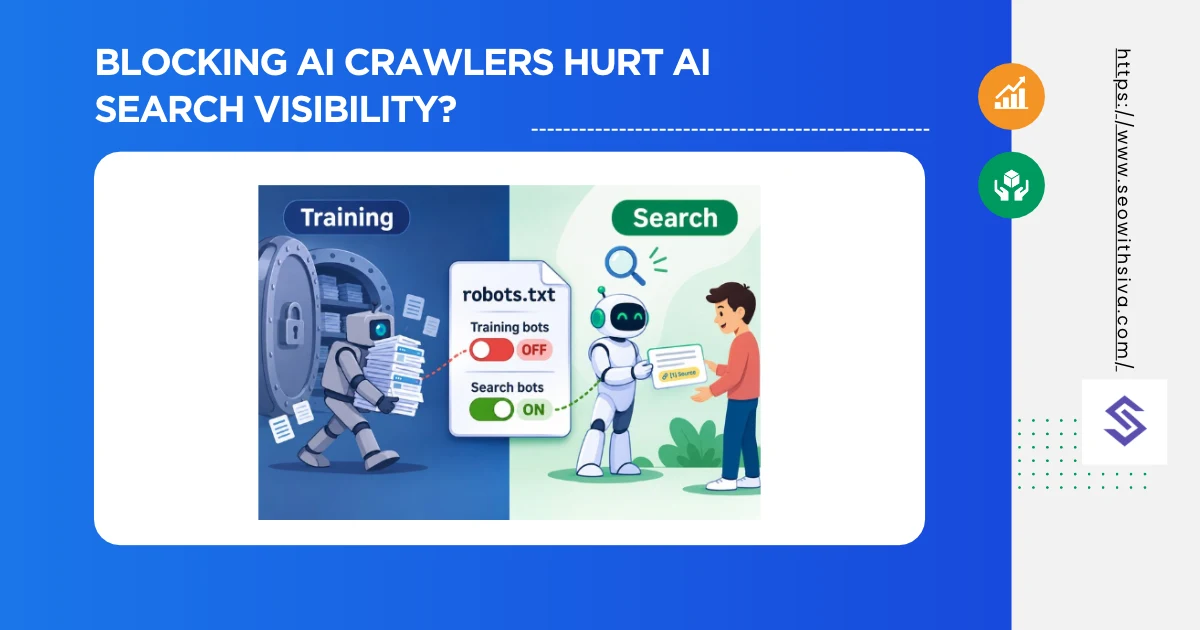
Google’s positive advice is mostly classic SEO. Make pages crawlable and indexable, write original content from real expertise, add useful images and video, and keep local and product details accurate. Crawl access is part of this: which AI crawlers to block or allow explains how robots.txt and CDN rules affect visibility. Structured data is covered in the schema markup guide, which explains which types still matter.
Content
The guide tells site owners to “Create the content yourself based on what you know about the topic.” It says content people find “unique, compelling, and useful” will likely influence your presence in generative AI search over the long run, more than any other suggestion in the guide. Its single test is “Is this content that my visitors would find satisfying?”
AI-assisted writing
Using AI tools is allowed. The guide says, “If you’re using generative AI tools to assist in content creation,” your work must meet the standards of Google’s Search Essentials.
Technical structure
Meet Search’s technical requirements, keep content crawlable, reduce duplicate content, and verify the site in Search Console. Google says semantic HTML is not required but helps accessibility tools such as screen readers. JavaScript sites need extra care, because Google can process JavaScript only when it isn’t blocked.
Images, video and local details
Google writes, “As with Google Search overall, our generative AI search features can bring in relevant images and video.” Following its existing image and video SEO guidance already counts as optimizing for AI search. Shops and local businesses should keep Merchant Center and Google Business Profile details current, since AI responses can draw on them.
How does Google’s guide apply to health and other YMYL sites?
The guide doesn’t mention health content, but Google’s people-first guidance raises the bar for it. Google gives “even more weight” to strong E-E-A-T on topics that affect people’s health, finances, or safety.
Google’s helpful content guidance calls these “Your Money or Your Life” topics, or YMYL. It states, “Of these aspects, trust is most important.” It also asks, “Is it self-evident to your visitors who authored your content?” Google notes that E-E-A-T “isn’t a specific ranking factor.”
For a medical publisher, the commodity test is unforgiving. Lists of common symptoms are available on thousands of sites. Clinical experience is not. The two titles below are illustrations written for this article.
| Commodity (likely skipped) | Non-commodity (worth citing) |
|---|---|
| “10 Signs of a Thyroid Problem” | “What a TSH of 6.2 Usually Means: An Endocrinologist Explains the Next Test” |
| “How to Lower Blood Pressure Naturally” | “Why Home BP Readings Differ From Clinic Readings, From a Cardiologist’s Practice” |
Applying Google’s guidance to health content, in practice, means named and credentialed authors, a visible medical reviewer, and first-hand clinical reasoning. This is my reading of how the two Google documents combine, not a statement in either.
What changed since Gemini 4 Hydrogen launched in Search?
On November 12, 2026, Google made Gemini 4 Hydrogen the model behind Search for all users. Google says Hydrogen improves query fan-out and links to a wider range of sites. The guide predates the launch but still applies.
Google’s Search announcement says “Hydrogen’s advanced reasoning supercharges our query fan-out technique in Search, connecting you to a broader range of helpful links than before.” Robby Stein, Google’s VP of Product for Search, said Hydrogen is “the new default model in AI Mode” (Search Engine Roundtable).
A wider fan-out could tempt sites to build a page for every sub-query. Google’s guide warns against exactly that. One strong page that answers the related sub-questions is the approach the guide supports. This is my inference from the guide and the Hydrogen announcement read together.
How do you audit a site against Google’s AI optimization guide?
Start with eligibility, then content quality, then measurement. The seven steps below follow the guide’s own order.
- Check eligibility. In Search Console, confirm your most important pages are indexed and can show with a snippet. Google adds that “Indexing and serving aren’t guaranteed.”
- Confirm the site is included in Search generative AI features in Search Console. The guide lists this as a requirement.
- Run a crawl check. Make sure robots.txt, your CDN, and any JavaScript don’t block Google from your content.
- Apply the commodity test to your top 20 pages. For each, ask whether a competitor could have written it without your expertise. Mark the ones that fail.
- Stop AI-only work done for Google. Pause llms.txt projects, chunking rewrites, and AI-specific schema that you started to win Google visibility.
- Add first-hand material to the failing pages. Use expert review, original data, case reasoning, or your own images and video.
- Record a baseline in the Generative AI performance report. Google points site owners to this Search Console report to see how content appears in generative AI features on Search and Discover. Then check it monthly.
What can’t Google’s guide, or this article, do?
Google’s guide can’t guarantee AI citations, and it doesn’t explain how Google picks sources. It covers Google only. Its central claim about non-commodity content is Google’s stated view, not published data.
- No selection mechanics. Google doesn’t disclose how AI Overviews or AI Mode choose which pages to cite.
- Google only. The guide doesn’t cover ChatGPT, Perplexity, or other AI search tools, which may treat files such as llms.txt differently.
- No outside data. Neither Google nor the coverage I read offers independent data showing that non-commodity content earns more AI citations.
- Vendor incentives. Much AI search advice comes from companies selling it. Semrush’s coverage of the guide ends by promoting its AI visibility tools. Lilach Bullock’s analysis is published by a consultant who sells GEO services. Google itself warns users to “Be wary of third-party tools that promise ranking success or claim to use ‘internal’ Google metrics.”
- Fresh changes. Hydrogen launched after the guide’s last update. Google may revise the guide, so check its “Last updated” date before acting on this article.
Your next step
Today, open Search Console, export your top 20 pages by clicks, and run the commodity test from step 4 on each one. Pick the weakest page and add one piece of first-hand material this week. For the wider framework, see the AI-first SEO foundations guide.
Frequently Asked Questions
Does Google use llms.txt for AI Overviews or AI Mode?
No. Google’s guide says you don’t need machine-readable files, AI text files, or Markdown to appear in Google Search, because Google Search doesn’t use them.
Is GEO vs SEO a real distinction for Google?
Not for Google Search. Google says optimizing for generative AI search is optimizing for the search experience, and thus still SEO.
What does a page need to appear in AI Overviews?
It must be indexed and eligible to show in Google Search with a snippet, and the site must be included in Search generative AI features in Search Console. Google says no other special optimizations are necessary.
Do I need special schema markup for AI Mode?
No. Google states that structured data isn’t required for generative AI search and that there’s no special schema.org markup to add. Structured data still helps with rich results.
Should I break my content into chunks for AI?
No. Google says there’s no requirement to break content into tiny pieces for AI. Clear paragraphs, sections, and headings written for readers are enough.
Can I use AI to write content for AI Overviews?
Yes, if the result meets Google’s Search Essentials standards. Google’s guide addresses content made with generative AI tools directly and applies the same quality bar.
How do I measure performance in AI Overviews and AI Mode?
Use the Generative AI performance report in Search Console. Google says it shows how content performs in generative AI features on Google Search and Discover.